
Florian Frank
Customer Cluster Social Security
BARRIER FREE SOLUTIONS WITH BRAINS
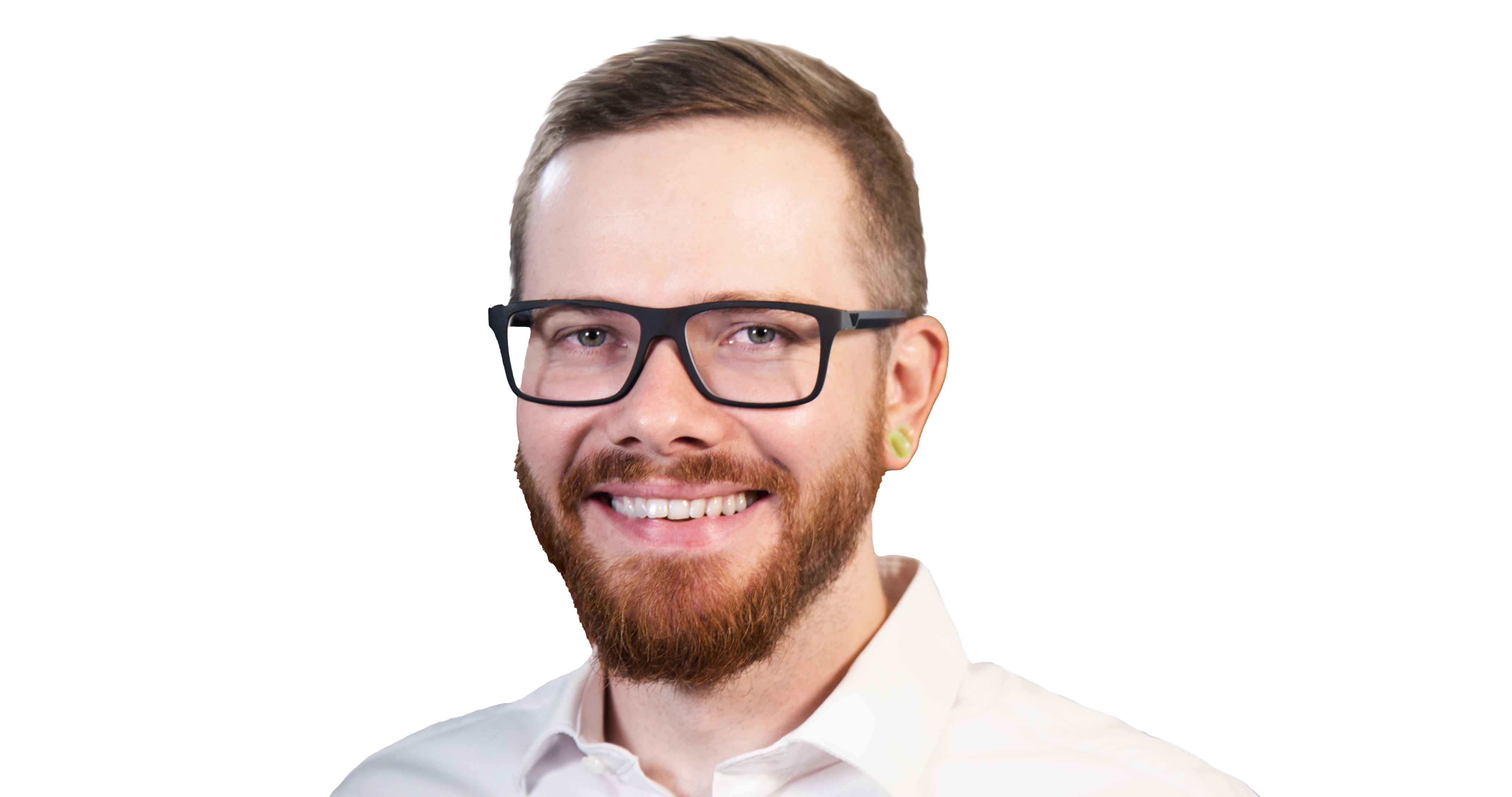

The mills of public administration often grind slowly, but the days of having to fight against inflexible structures are long gone. A lot is happening within the public sector and especially in the social sector, even if it seems like a lengthy process. In the following interview, you can find out why it sometimes takes longer for changes to be implemented and which topics are particularly close to Florian’s heart as a software developer. Let his insights and experiences inspire you, especially when it comes to digitalization and accessibility in social projects.
How did you hear about virtual7? What motivated you to apply here?
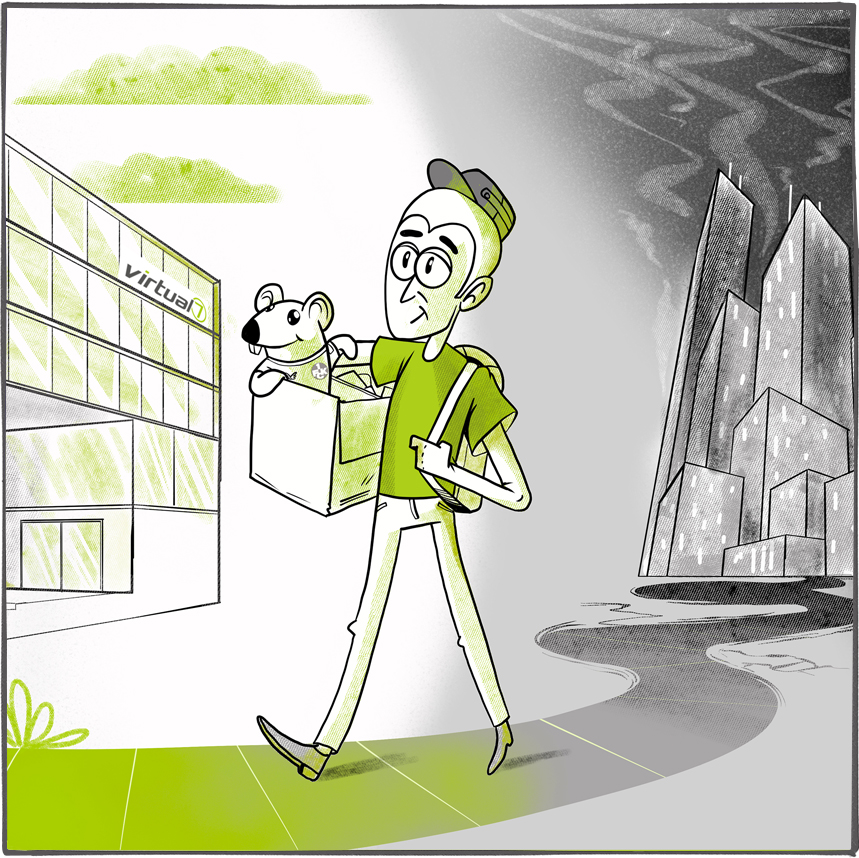
At the time, I was looking for a job because I was no longer happy at my old company. There was simply a lack of appreciation and it felt like you could be replaced at any time. That made me look around for new opportunities.
virtual7 then approached me via LinkedIn or Xing. To be honest, I had never heard of the company before, which is probably because virtual7 was not so well known in the Nuremberg area. When I browsed through the website, I thought it was cool that virtual7 does a lot in the public sector. At the time, the website talked a lot about Oracle Experts, which I honestly couldn’t relate to at first, as I come from a completely different technological background. virtual7 immediately appealed to me as a company and employer. Shortly after I was hired, responsiveness was introduced.
What does your daily work look like?
My working day usually starts at around six o’clock. I then log in to my customer’s site directly via the remote connection. I like to use the early morning hours for concentrated work, as it is still quiet and I can complete my tasks undisturbed. This productive phase lasts around two to two and a half hours. After that, I take a longer break and go to the gym.
When I come back, I usually have the daily meeting with the customer. We discuss what’s going on, who’s working on what and whether there are any problems we need to solve. This meeting usually lasts until 11:30 am. During the day, I then have various appointments or work on my tasks as a software developer. I work on my stories and tasks and exchange ideas with colleagues if there are specific questions or challenges. In the afternoon, I often take a short break to clear my head, either by going for a walk or playing with my child. My working day usually ends between 5 and 6 p.m., depending on how long the breaks were.

Do you have other roles at virtual7 in addition to your work with customers?
In addition to my work for the client, I am also active in recruiting support. This means that I also conduct interviews with applicants from time to time. Overall, my day is very busy, but I find a good balance between work and private life thanks to the many short and longer breaks.
Have you ever been able to actively bring about change through your work in the project?
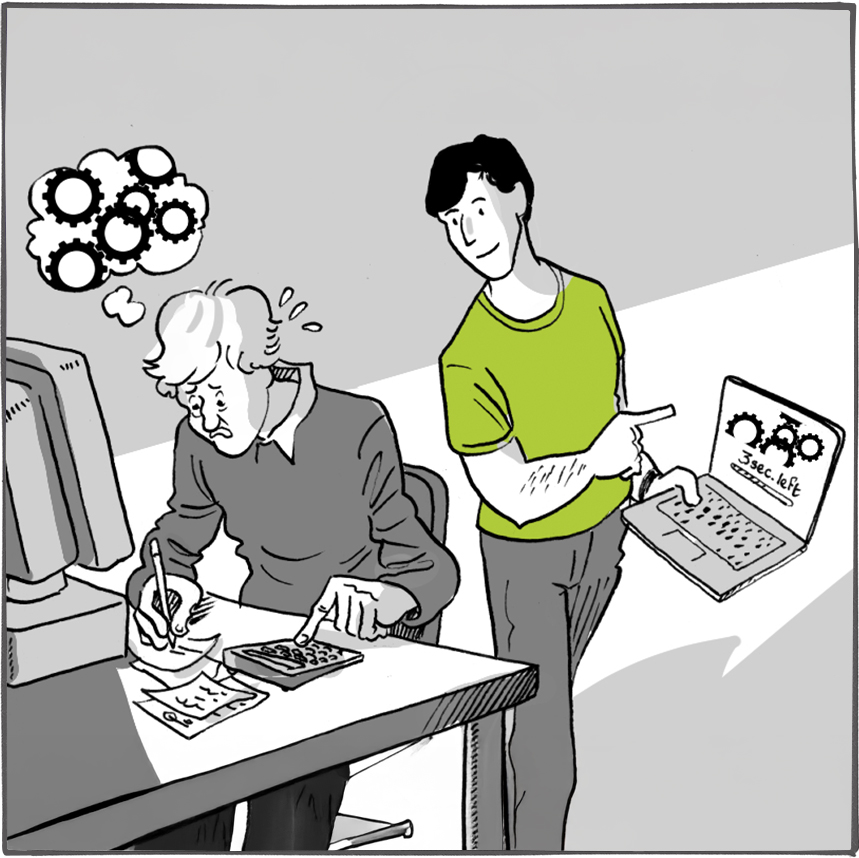
Definitely! In one project, I was in a team that intended to work in an agile way, but tended to work in a classic waterfall model. My colleagues came from a completely different background and had difficulties getting to grips with the new method. Despite internal training and the desire for agility, there was often a lack of understanding and implementation. I invested a lot of energy in explaining to the team what Scrum actually is and why we carry out certain processes such as planning, refinement and the daily stand-up meeting. It was an intensive learning process, and up to a certain point I was able to see success. Some team members began to recognize the value of these methods. Unfortunately, there were always blockages from the project management that hindered progress. This was frustrating, but also instructive. In the end, I learned a lot from this experience.

Working at virtual7 sounds great! What if you realize after a while that you don’t like the project?
If the project environment is generally not to your liking, be it because of the team dynamics or the expectations of the project management, we will support you in finding a solution. If you are unhappy in a project and realize that this is affecting your productivity, then that is not a problem. We will then look for another task together that suits you better. Even if this means a short-term loss of income, we attach great importance to ensuring that you remain satisfied and motivated in the long term. We have done this many times before and it has always worked well. Your well-being and success are important to us as part of our cluster!
Is the work at the customer very different from the work at virtual7? Can this be separated?
At virtual7, we work in a very agile, transparent manner and place great value on modern working methods. Many of these approaches can also be brought to the customer. New ideas on transparency are often appreciated and implemented. However, there are clear differences outside of my project. Some clients’ working methods can be very rigid and less flexible. This is due to the strict regulations and specifications that have to be adhered to there.
There are always small adjustments that you have to put up with. Nevertheless, I try to bring as much flexibility and knowledge as possible to my project environment.

Why is it worth working in this area of the public sector?
I think it’s pretty clear why working in public administration is worthwhile. In the end, it’s about really helping citizens and making their lives easier or better. For example, I recently changed my address online and I was surprised how easy it was without having to go to the office. Improvements like that make a huge difference, and that’s one of the main reasons why I love working in the public sector. Of course, there are challenges posed by laws or data protection that can make some things more complicated. But that’s exactly why it’s important to always keep the added value in mind. If you keep this focus, you will find ways to get the best out of the given framework conditions.

What are your hopes for the future?
My hope is that we will find a good balance between data protection and innovation in Germany. Data protection is important, no question about it, but we should make sure that we don’t overdo it. In other countries, it works without extremely strict regulations, without masses of data being stolen or personal information being misused. Sometimes I have the feeling that we have too much fear in this country, which is holding us back in our development. I hope that politicians and other decision-makers will become more open to pragmatic solutions so that we don’t fall behind technologically.

What is the added value of your work?
My greatest added value definitely lies in my knowledge and commitment to accessibility. Over the past few years, I have been working intensively on this topic and I am now often the point of contact in projects when it comes to accessibility.
I had little to do with this before, but now I see how important it is that our applications and systems are accessible to all people, regardless of their abilities. Design projects often focus on visual design first, but it’s crucial to also consider the needs of people with visual or cognitive impairments. It can easily happen that with too much focus on fancy design elements, functionality for people with special needs falls by the wayside. That’s why I make it a priority to always prioritize accessibility to ensure that everyone has access to our solutions.

about the artist
Ruth Lamich
Illustration designer from the Westerwald defines herself professionally as a hybrid of graphic design and illustration. She shares her curiosity and artistic preferences on social media – both digital and analog, with a particular focus on watercolor. The influences from comics and manga are unmistakable.
“Storytelling fascinates me. A two-dimensional image can tell entire stories – which is exactly why this task was made for me. I work conceptually: acquiring knowledge, processing it visually and passing it on is my deepest motivation. That’s exactly what I teach in my manga drawing courses, for example.”