
Philipp Regenfuß
Customer Cluster Social Security
Detours increase local knowledge
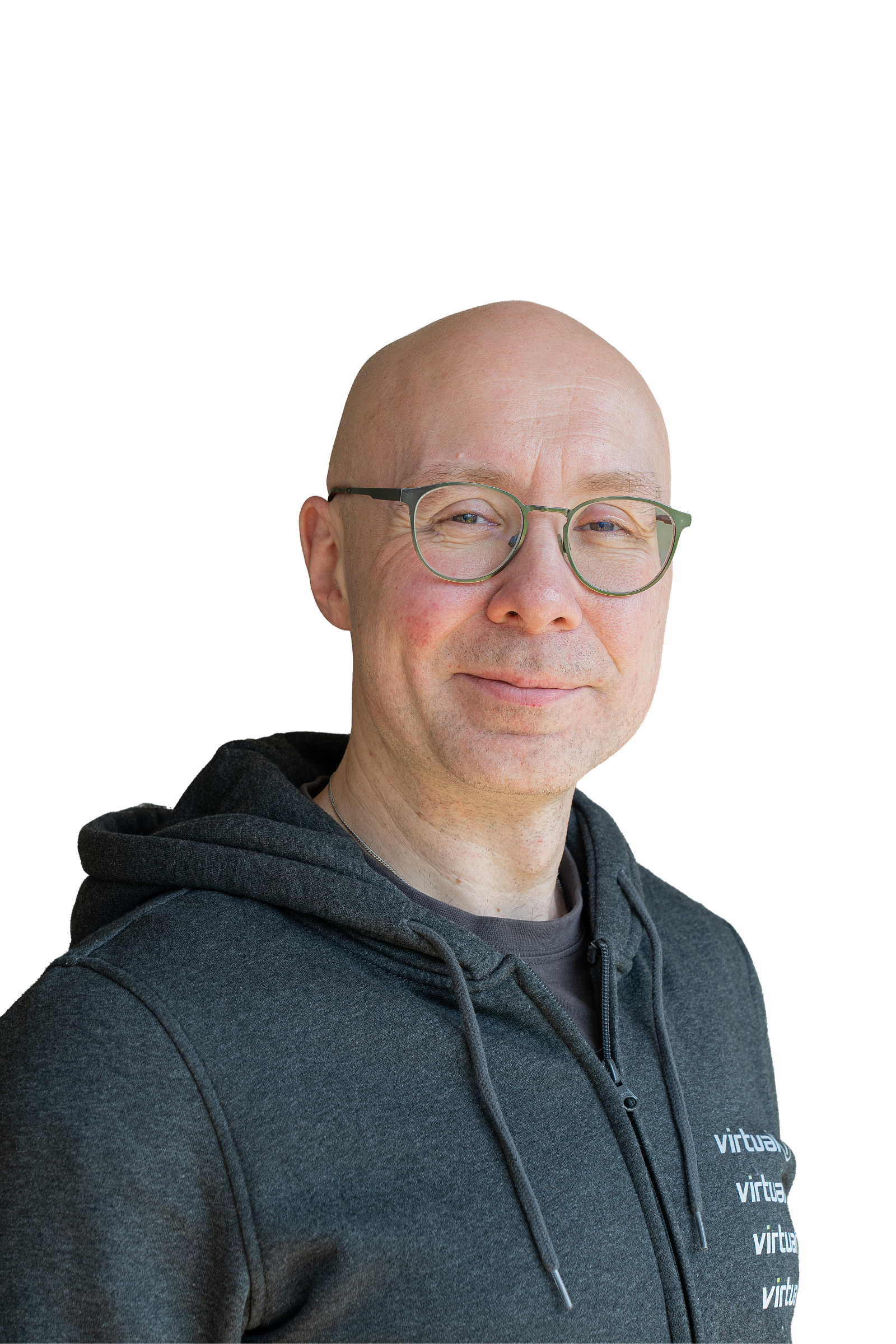

Sometimes detours lead us exactly where we need to be. Philipp has already gone through various stages in his career. When he was looking for a home office job, he never expected that a job interview of all things, which he originally only saw as an exercise, would not only change his professional situation, but also his view of the digitalization of Germany. Today, Philipp is right in the middle of an exciting project and can say with conviction that this unexpected path has led him to a real treasure that he might otherwise have overlooked. In this interview, he reveals how this surprising turn of events has changed his professional life and why he is glad to have taken this unexpected path.
How did you come to virtual7?
That was actually through a headhunter who suggested several companies to me. virtual7 didn’t sound particularly exciting at first, I have to admit. Digitization of public authorities seemed rather dry to me at first. But I just wanted to take the interview with me for practice purposes. In the end, the interview blew me away! It was particularly important for me to find out in my application process how the company can integrate a remote position. Many companies didn’t have a clear answer to this or seemed unsure. virtual7, on the other hand, was immediately convincing. Due to the various projects throughout Germany and the cooperation with our Romanian colleagues, we naturally have a lot of experience with remote work. The corporate culture and the way we deal with customers were presented authentically and transparently. In the end, that convinced me completely.
How do you feel about the corporate culture?
I was particularly impressed by the authenticity of virtual7. It is extremely important to me that what a company communicates to the outside world is actually practiced internally. If the fundamental values and promises don’t match, I quickly become dissatisfied. As far as the corporate culture is concerned, I find the way of working at virtual7 particularly exciting. Although I could also work in a hierarchically structured environment, such structures often lead to unnecessary tensions and this quickly takes the joy out of my work. At virtual7, on the other hand, I experience a way of working where colleagues support each other through responsiveness. This not only creates a pleasant working atmosphere, but also an environment in which I can develop to my full potential.

What does your daily work look like?
In my day-to-day work, I mainly work as a developer for one of our clients. I currently work for a large German authority in the field of social security. My tasks vary, but essentially I am responsible for developing and enhancing software.
We work in sprints that last two weeks. This means that we have to achieve certain goals in each sprint. Be it implementing new functions, improving existing features or fixing bugs. My main task is to implement these requirements and ensure that we deliver on time and in the desired quality. In addition to the development tasks, I am also part of the maintenance team from time to time. If there are questions or problems from the end users, these are forwarded to us in the form of tickets. Overall, my job is very varied.
Every sprint brings new challenges and tasks, and that makes the work exciting and dynamic. After a year on the project, I’m trying to get more involved internally at virtual7 and take on new roles so that I can help shape things even more.
You mainly work from home – how does collaboration work in your computer?
That’s an exciting question. I have actually found that contact with my colleagues in the project environment is much more intensive than I would have originally thought. However, despite working remotely, I have regular contact with my colleagues at virtual7 and receive regular updates and feedback through various meetings. In the beginning, I had a little difficulty feeling part of the cluster. This was mainly due to the fact that I was often busy on the project when the cluster meetings took place. The regular meetings with the cluster and especially the bigger events like the annual conference really helped me to settle in at virtual7. The Cluster Days, which take place once a year, are always a highlight. Last year, we even split them into two half days, virtual and on-site. It was a great opportunity to get to know each other better and intensify the exchange.

Are you aware of what’s happening at virtual7 when you’re working from home?
Of course, when I’m working from home, I can already see what’s happening at virtual7 via Microsoft Teams. The regular updates and posts help me to keep track of things. I mainly communicate via Teams and can therefore actively participate in what’s happening. I also listen to our podcast from time to time. I particularly enjoy doing this in winter when I’m out and about, whether I’m jumping rope or going for a walk. The podcasts are a good way of keeping up to date and finding out a bit more about developments in the company.
What added value does the project you are currently working on bring?
I am currently working on a project that is helping to combat the skills shortage in Germany by simplifying the process for employers to hire international professionals. It makes the work faster and more efficient, which I think makes a real difference.

What do you actually bring to virtual7 and what is particularly important to you so that you can contribute your skills?
As a Java developer, my focus is on working with different technologies, and I currently work a lot with the Quarkus framework. I wasn’t familiar with this framework before, but my previous experience with Kafka and other technologies helps me to quickly familiarize myself with new systems. What is particularly important to me is open and clear communication within the team. In software development, we often work together on different aspects of a project. It often happens that I have to collaborate with other colleagues or get their feedback, especially during code reviews.
We have regular daily stand-ups where we discuss progress and potential blockers. It’s important to me not to wait until the next meeting when I encounter a problem. If I need help, I prefer to ask for support straight away. In this way, we can find solutions more quickly and make the entire development process more efficient. So for me, good collaboration is not just a question of technical skills, but also of interpersonal communication and a willingness to address problems promptly.

What do you think about the digitalization of the public sector?
My perspective on digitalization in public administration has definitely changed since I started working in this area. Initially, I had a somewhat stereotypical image of public authorities: bureaucratic, slow and perhaps not always particularly open to innovation.
This idea was quickly put into perspective. Of course, there are still specific ways of working and processes that prevail in public authorities, but I have found that many people in these institutions are actually very committed and open to change. One personal experience that has stayed with me was my first contact with a public authority as a private individual. Back then, I had to experience someone taking a breakfast break in the middle of my request, which was a formative experience.
But the reality of my job is fortunately very different.

Is it actually true that authorities are still working with outdated technologies?
This is a widespread cliché, but I can’t confirm this in my current project.
For example, we use the Quarkus framework, which is relatively new, and use Kafka for certain tasks. Overall, I’m very happy with the technology stack in my project. I can’t really compare what it looks like in other projects, as I’ve only worked on this one so far. But I’ve heard that we’re a bit lucky here and are actually working with relatively up-to-date technologies.
Of course, there is always room for improvement, and not every project will be equipped with the latest tools. Sometimes it’s just not realistic to always work with top technologies. However, I am optimistic that authorities will gradually upgrade.
The trend is definitely moving towards more modern technologies, and there are already initiatives that deal with topics such as artificial intelligence. For example, we are currently evaluating how AI tools such as Copilot can be put to good use. All in all, I see the trend that more and more modern technologies will also find their way into public authorities. We are on the right track and I think it will be exciting to see how this develops in the future.

about the artist
Alice Immekeppel
My name is Alice Immekeppel and I come from Aachen. After my training in the pharmaceutical-commercial field and a few years in my profession, it was the birth of my children that inspired me to follow my heart. Drawing, which has accompanied me all my life, became my vocation. Today I work as a freelance illustrator and graphic designer and love to tell stories with my pictures.
Whether imaginative children’s books, lively comics, unique cover designs or personal commissions – I realize every idea with great attention to detail and a touch of playfulness. My illustrations should not only be beautiful to look at, but also evoke emotions and invite you to dream.
“Storytelling fascinates me. A two-dimensional image can tell entire stories – which is exactly why this task was made for me. I work conceptually: acquiring knowledge, processing it visually and passing it on is my deepest motivation. That’s exactly what I teach in my manga drawing courses, for example.”